
Understanding One of the Most Common Car Stackers for Urban Parking
Parking stackers increase capacity in tight sites, but the best results come from matching the equipment to the building, users, and long term service plan.
For The Trivial Company, automated parking is never only a product conversation. It is also a planning, installation, service, and user-support conversation. A system can look simple from the outside, but the project team still needs to understand how vehicles move, how residents or staff will use the equipment, and how service access will be handled after turnover.
Start With the Site Conditions
The first step is to understand the site. Important details include available clear height, structural layout, driveway approach, column locations, electrical access, drainage, fire and life safety coordination, and the number of vehicles the project needs to support. These details influence whether a two-post stacker, four-post lift, puzzle system, or customized automated parking layout is the better fit.
Site conditions also affect the installation plan. Equipment needs room for delivery, assembly, adjustment, testing, and turnover. When these conditions are reviewed early, the project team can reduce rework and avoid late-stage coordination issues. This matters for both new construction and existing properties because small coordination misses can become daily operating problems once residents begin using the garage.
Plan for Real Users
Automated parking systems need to make sense for the people who will use them. Multifamily residents, property managers, maintenance teams, valet teams, and service technicians all interact with the system differently. Good planning accounts for signage, training, user flow, access control, response procedures, and what happens when a user needs help.
Turnover is especially important. A building team should know how to explain the system, where to report issues, and when to request service. A short training plan can prevent many avoidable problems during the first months of operation. It also gives property staff a common language for describing issues when they contact a service team.
Build Maintenance Into the Decision
Service access and maintenance planning should not be an afterthought. Parking stackers and puzzle systems include moving components, controls, sensors, platforms, and safety systems that need periodic inspection. A preventive service plan helps property teams document recurring issues, reduce emergency calls, and keep the equipment operating more consistently.
Maintenance planning also helps owners understand the real operating life of a system. A parking system that is inspected, adjusted, and supported on a consistent schedule is easier to manage than one that is only addressed after a failure. The goal is not just to repair equipment. The goal is to protect daily access for the people who rely on the garage.
Use the Right TTC Resource
If your team is still comparing equipment types, start with the main parking stackers page. If the project is moving toward construction, review installation service. If the system is already in operation, the preventive service page is the better next stop.
Some sites do not fit neatly into a standard product category. In those cases, customized systems may help the design team coordinate equipment options with site constraints, operations, and long term support requirements. Remote support can also improve the response path. The RAUL remote access page explains how remote visibility can support troubleshooting and escalation when a parking lift or stacker needs attention.
What to Prepare Before Reaching Out
Before contacting a parking system partner, gather the basics: project address, desired parking count, available drawings, current operating issues if the system already exists, and the timeline for design, installation, or service. If the question is about an existing system, photos, equipment model information, and a short description of the issue can help the team understand the situation faster.
For parking stackers, the most useful conversations are specific. A clear description of the site and the operating goal helps separate general product information from practical next steps. That saves time for owners, architects, contractors, and property managers.
Talk Through the Next Step
A short planning conversation can clarify the right path. The team can review space constraints, current drawings, service concerns, or operating goals and decide whether the next step is design review, installation coordination, maintenance planning, or a site-specific system discussion.
To start that conversation, use the automated parking systems contact page. Share the project location, basic parking goal, and where the project stands today, and The Trivial Company can help point the next step in the right direction.
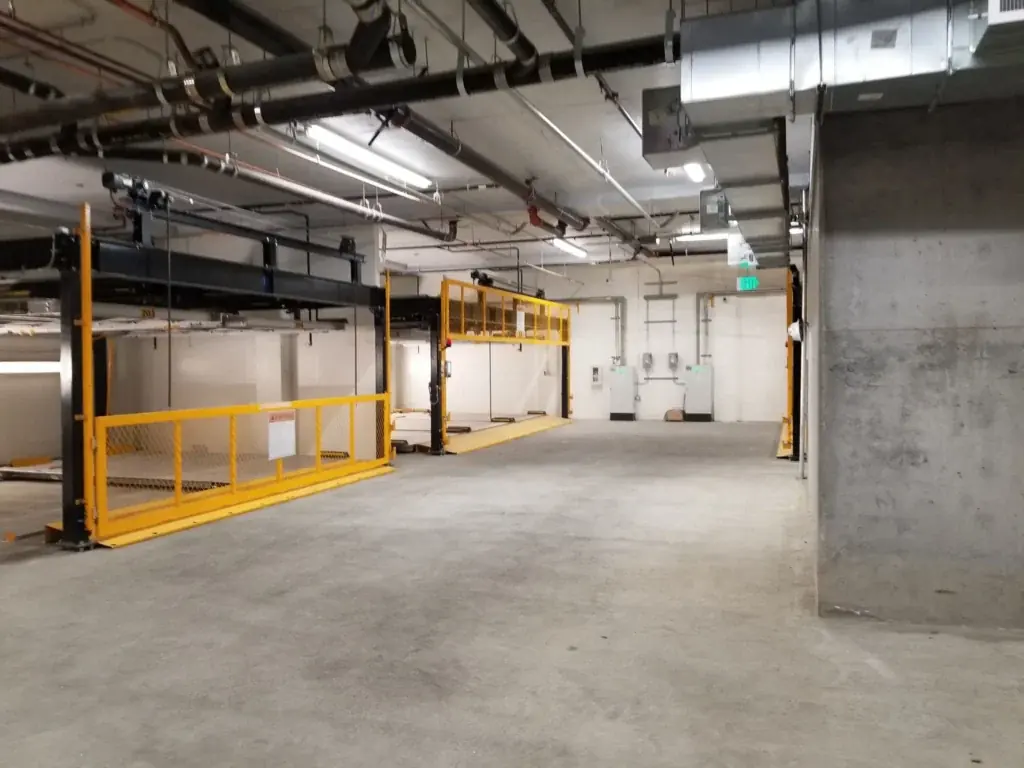
In the world of urban development and property management, one solution continues to rise in popularity because of its practicality, space efficiency, and reliability: car stackers. These mechanical systems are transforming how buildings handle parking, especially in dense markets where every square foot matters.
At their core, car stackers allow multiple vehicles to be parked in the same footprint that would normally hold a single car. By stacking vehicles vertically, developers and property owners can increase usable space without expanding the parking area horizontally. This makes car stackers a preferred solution for residential buildings, mixed-use developments, and retrofit projects across the Bay Area and beyond.
Why Car Stackers Are So Common
One reason car stackers are so widely used is their versatility. Unlike large-scale automated parking facilities that require significant structural modifications, car stackers can often be integrated into existing parking areas with minimal disruption. They rely on durable lifts and platforms that safely raise and lower vehicles with precision and reliability.
Property owners choose car stacker systems because they:
- Save valuable space while maintaining parking capacity
- Reduce construction costs compared to new parking structures
- Adapt to a variety of property layouts, from basements to rooftops
- Support higher density development in urban zones
The 2-Level Puzzle Car Stacker System
A great example of efficient design is the 2-Level Puzzle System offered by The Trivial Company. This configuration combines the vertical efficiency of a stacker with the lateral movement of a puzzle system. Instead of simply lifting one car above another, the puzzle layout uses controlled sequencing and smart positioning to optimize every inch of available space.
The result is a compact, cost-effective parking solution that fits seamlessly into high-density residential, commercial, and mixed-use projects. These systems allow multiple cars to be arranged efficiently while maintaining quick, easy access for drivers.
Smarter Parking Through Real-Time Monitoring
Every car stacker system performs best when supported by intelligent maintenance and monitoring tools. That is where RAUL™ (Remote Access Unit for Lifts) comes in. RAUL enables real-time diagnostics and remote support for parking lifts, allowing technicians to monitor performance, detect issues early, and reduce unnecessary service calls.
By combining physical efficiency with digital oversight, property managers can maintain higher uptime and lower maintenance costs. RAUL provides the visibility needed to keep parking operations smooth, safe, and predictable.
How Car Stackers Fit into Modern Development
In cities like San Francisco, Oakland, and San Jose, traditional parking structures often take up valuable land that could be used for housing or amenities. With car stackers, developers can double their parking capacity within the same footprint, freeing up space for more productive uses such as retail, open space, or residential units.
This combination of compact design and smart technology makes car stackers one of the most cost-effective tools for developers seeking to balance efficiency, safety, and modern design expectations.
The Future of Car Stackers in Urban Projects
Car stackers are no longer niche solutions. They are now an essential part of modern construction and urban design. As land prices increase and zoning regulations evolve, mechanical parking systems continue to help developers meet density requirements without sacrificing project aesthetics or livability.
At The Trivial Company, we design, install, and maintain mechanical parking systems that work seamlessly for the long term. From the 2-Level Puzzle System to RAUL™ monitoring, every part of our process is built around reliability, safety, and performance.
For a broader equipment overview, visit the main car stackers for urban parking resource. You can also review installation service, preventive service, and contact The Trivial Company when your project is ready for next steps.