
The Trivial Company

Vertical Parking Systems | The Trivial Company

Puzzle parking systems can add capacity in constrained sites, but they work best when equipment selection, operations, and maintenance are reviewed together.

Thank you for reading this post, don't forget to subscribe!

For The Trivial Company, automated parking is never only a product conversation. It is also a planning, installation, service, and user-support conversation. A system can look simple from the outside, but the project team still needs to understand how vehicles move, how residents or staff will use the equipment, and how service access will be handled after turnover.

Start With the Site Conditions

The first step is to understand the site. Important details include available clear height, structural layout, driveway approach, column locations, electrical access, drainage, fire and life safety coordination, and the number of vehicles the project needs to support. These details influence whether a two-post stacker, four-post lift, puzzle system, or customized automated parking layout is the better fit.

Site conditions also affect the installation plan. Equipment needs room for delivery, assembly, adjustment, testing, and turnover. When these conditions are reviewed early, the project team can reduce rework and avoid late-stage coordination issues. This matters for both new construction and existing properties because small coordination misses can become daily operating problems once residents begin using the garage.

Plan for Real Users

Automated parking systems need to make sense for the people who will use them. Multifamily residents, property managers, maintenance teams, valet teams, and service technicians all interact with the system differently. Good planning accounts for signage, training, user flow, access control, response procedures, and what happens when a user needs help.

Turnover is especially important. A building team should know how to explain the system, where to report issues, and when to request service. A short training plan can prevent many avoidable problems during the first months of operation. It also gives property staff a common language for describing issues when they contact a service team.

Build Maintenance Into the Decision

Service access and maintenance planning should not be an afterthought. Parking stackers and puzzle systems include moving components, controls, sensors, platforms, and safety systems that need periodic inspection. A preventive service plan helps property teams document recurring issues, reduce emergency calls, and keep the equipment operating more consistently.

Maintenance planning also helps owners understand the real operating life of a system. A parking system that is inspected, adjusted, and supported on a consistent schedule is easier to manage than one that is only addressed after a failure. The goal is not just to repair equipment. The goal is to protect daily access for the people who rely on the garage.

Use the Right TTC Resource

If your team is still comparing equipment types, start with the main parking stackers page. If the project is moving toward construction, review installation service. If the system is already in operation, the preventive service page is the better next stop.

Some sites do not fit neatly into a standard product category. In those cases, customized systems may help the design team coordinate equipment options with site constraints, operations, and long term support requirements. Remote support can also improve the response path. The RAUL remote access page explains how remote visibility can support troubleshooting and escalation when a parking lift or stacker needs attention.

What to Prepare Before Reaching Out

Before contacting a parking system partner, gather the basics: project address, desired parking count, available drawings, current operating issues if the system already exists, and the timeline for design, installation, or service. If the question is about an existing system, photos, equipment model information, and a short description of the issue can help the team understand the situation faster.

For puzzle parking systems, the most useful conversations are specific. A clear description of the site and the operating goal helps separate general product information from practical next steps. That saves time for owners, architects, contractors, and property managers.

Talk Through the Next Step

A short planning conversation can clarify the right path. The team can review space constraints, current drawings, service concerns, or operating goals and decide whether the next step is design review, installation coordination, maintenance planning, or a site-specific system discussion.

To start that conversation, use the automated parking systems contact page. Share the project location, basic parking goal, and where the project stands today, and The Trivial Company can help point the next step in the right direction.

Vertical parking systems including parking stackers and puzzle parking for high-density development

Parking Stackers and Puzzle Parking for High-Density Development

As urban development becomes denser, traditional parking solutions are increasingly difficult to justify. Large surface lots and sprawling garages consume valuable land that could otherwise be used for housing, retail, or amenities. In response, developers are turning to vertical parking systems to meet parking requirements while preserving usable space.

Vertical parking systems are designed to store vehicles upward rather than outward. By leveraging height instead of horizontal footprint, these systems allow significantly more vehicles to be accommodated within constrained sites. Among the most common vertical solutions used in high-density development are parking stackers and puzzle parking systems.

The Role of Vertical Parking Systems in Dense Developments

In high-density urban projects, land cost and zoning restrictions often make conventional parking infeasible. Vertical parking systems solve this problem by stacking vehicles in multiple levels using mechanical lifts, sliding platforms, or a combination of both.

These systems are especially well-suited for infill projects, mixed-use developments, and multifamily buildings where excavation depth is limited or expensive. By reducing the physical footprint required for parking, developers can allocate more space to revenue-generating uses while still complying with local parking codes.

An overview of common stacker configurations can be found here:
https://thetrivialcompany.com/parking-stackers/

Parking Stackers vs. Puzzle Parking Systems

While both solutions fall under the umbrella of vertical parking systems, parking stackers and puzzle parking systems serve slightly different needs.

Parking stackers typically move vehicles vertically, placing one car above another. They are mechanically simpler and often used where access frequency is moderate and space constraints are straightforward.

Puzzle parking systems, on the other hand, combine vertical and horizontal movement. Vehicles are shifted laterally and vertically to access a specific parking space, allowing for higher density and greater flexibility. These systems are ideal for developments where maximizing parking count is a top priority.

For a detailed look at puzzle-style configurations, see:
https://thetrivialcompany.com/parking-puzzles/

High-Density Applications of Puzzle Parking

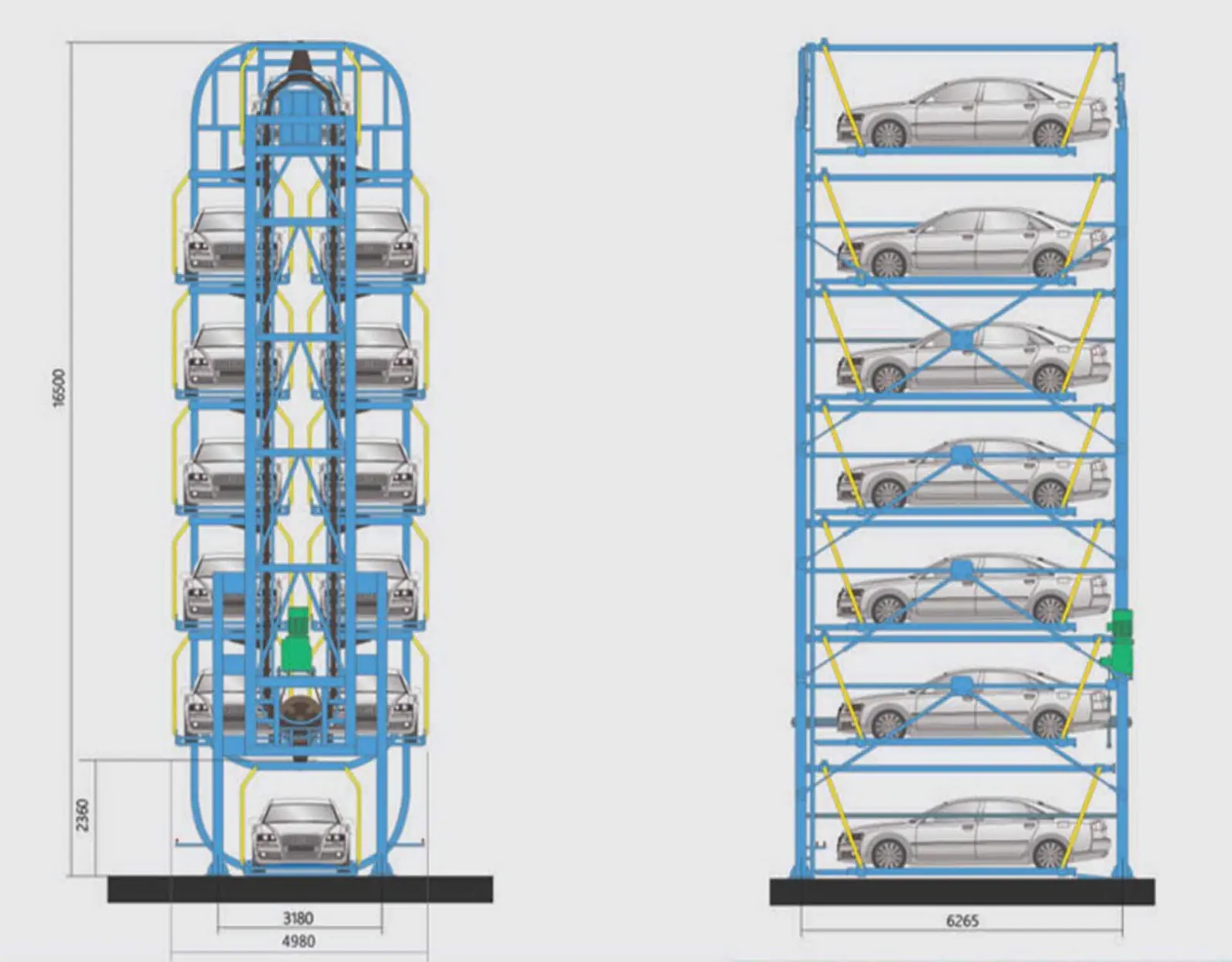
Puzzle parking systems are frequently deployed in urban residential towers, commercial developments, and mixed-use projects where land is extremely limited. Multi-level installations, such as seven-level systems, demonstrate how vertical parking systems can dramatically increase capacity without expanding a building’s footprint.

A real-world example of this approach can be explored here:
https://thetrivialcompany.com/7-level-puzzle-system/

Why Vertical Parking Systems Continue to Gain Adoption

As cities grow upward, parking infrastructure must evolve accordingly. Vertical parking systems provide a scalable, efficient solution for high-density development by reducing land use, lowering construction complexity, and supporting modern urban design goals.

The Trivial Company designs, installs, and services all of these systems, including parking stackers, puzzle parking systems, and fully customized vertical parking configurations. From early design coordination through installation and long-term support, our team handles the entire process for high-density projects nationwide.